Capture Authentic
Voices For High-
Quality AI Training
Our Speech Data Collection Services capture diverse, natural voice recordings across languages, accents, demographics, and environments for reliable AI and speech model training.
Talk to an AI Data Expert
Capture Authentic Multilingual Voices For Accurate,
Diverse, And High-Quality Speech AI Model Training
Data Collection.
Book a Strategy Session
Our Speech Data Collection Services deliver authentic voice recordings from native speakers across languages, accents, age groups, genders, and regional variations. We design customized recording projects based on your AI training requirements, capturing natural conversations, commands, prompts, and everyday speech in controlled or real-world environments. Each dataset undergoes quality checks, validation, and structured annotation to ensure consistency, accuracy, and usability for speech recognition, conversational AI, voice assistants, and multilingual model development.
Give AI a more natural voice.
Build smarter speech and audio models with authentic, high-quality voice data collected from native speakers across languages, accents, dialects, and real-world environments.
Native Speaker Diversity
Capture authentic voices from native speakers across different languages, dialects, accents, age groups, genders, and regional variations.
Natural Speech Patterns
Train AI with natural conversations, commands, prompts, pronunciation, tone, rhythm, vocabulary, and everyday speaking patterns.
AI-Ready Audio Data
Every recording is quality checked, validated and structured to create reliable training data for speech recognition, conversational AI and voice models.
Native linguistic diversity
Authentic speaker patterns
Natural real-world speech
Validated training data
Turn real human speech into AI intelligence.
High-quality speech data helps AI understand more than words. It captures pronunciation, tone, accents, pauses, speaking styles, and the context behind everyday communication.
Human Voice
Authentic recordings from native speakers capturing natural pronunciation, accents and speaking styles.
Speech Context
Conversations, commands, scripted prompts and domain-specific speech create richer AI datasets.
Quality Layer
Audio is reviewed and validated for consistency, clarity and suitability for model training.
Training Ready
Structured speech data can support conversational AI, speech recognition and next-generation voice systems.
Regional voices and pronunciation patterns.
Realistic speech beyond scripted commands.
Speech captured across practical environments.
Validated audio prepared for AI workflows.
Our Native Speech & Audio Recording Capabilities
Native Speaker Recruitment
Recruit verified native speakers across languages, accents, dialects, age groups, and regional backgrounds.
Scripted Speech Recording
Capture clear, consistent recordings using customized scripts, prompts, commands, and domain-specific speech scenarios.
Natural Conversation
Recording
Collect spontaneous dialogues and everyday conversations to capture authentic speaking patterns, expressions, tone, and pronunciation.
Audio Quality & Validation
Apply rigorous quality checks for clarity, background noise, pronunciation, recording consistency, and dataset accuracy.
Native Speech Data Built for Real-World AI Applications
Conversational AI &
Virtual Assistants
Voice Assistant Training, Intent Recognition, Multilingual Dialogues, Natural Language Understanding, and More...
Healthcare +
Pharmaceuticals
Medical Speech Recognition, Patient-Doctor Conversations, Clinical Dictation, Healthcare Voice Assistants, and More...
Banking, Financials, +
Fintech
Voice Authentication, Customer Service Calls, Financial Queries, Fraud Detection, Transaction Assistance, and More...
Automotive + Mobility
In-Car Voice Commands, Navigation Speech, Driver Assistance, Hands-Free Controls, Multilingual Voice Interaction, and More...
Customer Service +
Contact Centers
Call Recordings, Agent-Customer Dialogues, Voice Intent Data, Sentiment Recognition, Quality Monitoring, and More...
Software + Technology
Speech Recognition, Voice Interfaces, AI Assistants, Text-to-Speech Evaluation, LLM Voice Applications, and More...
High-Fidelity Training Modalities
Purpose-built data environments tailored to the precise architecture of your foundation models.

Text & Conversational
AI
Structuring complex multi-turn dialogue, logic-based reasoning chains (CoT), and deep linguistic alignment for global and sovereign LLMs.
Read More ♧
Vision & Spatial AI
Engineering pixel-perfect 2D/3D sensor fusion, semantic segmentation, and LiDAR point clouds for advanced perception systems.
Read More ♧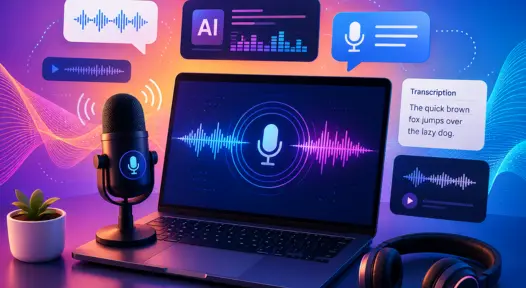
Speech & Audio
Intelligence
Architecting multi-speaker diarization, phonetic tagging, and studio-grade voice corpora across 200+ global dialects.
Read More ♧
Multimodal &
Embodied AI
Bridging text, vision, and sensor inputs to train highly accurate agentic workflows and real-world automated systems.
Read More ♧Enterprise Data Governance
Built on a strict zero-trust architecture to protect mission-critical IP at every stage of the AI lifecycle.
Regulatory Alignment
Operating under strict NDAs, GDPR compliance, and ISO-certified frameworks to ensure absolute global data sovereignty and risk mitigation.
Deterministic Quality Control
Executing multi-tier validation and Expert-in-the-Loop (HITL) consensus to guarantee hallucination-free, highly accurate training data.
Secure Infrastructure
Utilizing SOC-compliant workflows, air-gapped processing environments, and federated data pipelines to permanently eliminate data leakage.
Frequently Asked Questions
Have questions? We’re here to help. Here are some of our most common queries.
Multilingual SFT & Prompt Generation is a specialised AI training process that improves the understanding, generation, and response to multi-lingual content by large language models. Supervised fine-tuning (SFT) is the process of training an existing AI model on curated instruction-response pairs, created or validated by human experts. These datasets are generated in a multi-lingual scenario in different languages, dialects, cultural settings and industry specific domains.
Prompt generation involves generating diverse, natural and task specific prompts that capture the characteristics of real users’ communication with artificial intelligence (AI) systems. These prompts could be used for question answering, summarisation, reasoning, content generation, classification, customer support, translation and many other AI usecases.
Multilingual SFT & Prompt Generation is of high quality and helps models understand linguistic nuances, regional expressions, cultural references, terminology, and variations in user intent. Furthermore, native linguists and domain specialists can review prompts and responses to ensure accuracy and relevance, which can further improve dataset quality. This allows organizations to create multilingual AI platforms that provide more natural, consistent, culturally appropriate and reliable responses to users in global markets.
Multilingual SFT is important because large language models may not perform equally well across all languages, especially when there is not enough training data for regional, low-resource, or highly specialised languages. Multilingual SFT & Prompt Generation gives models well-structured, high-quality examples to improve their understanding of different languages, modes of communication, cultural contexts, and user expectations.
For certain tasks, we can teach models on prompt-response pairs in which we carefully demonstrate the behaviour we want the model to learn (this is known as supervised fine-tuning). These include general conversations, customer support, content generation, question answering, summarisation, reasoning and domain specific applications. . Native language experts can check the data for accuracy of grammar, terminology, tone, cultural relevance and contextual meaning.
Multilingual SFT may also improve instruction following and response consistency across languages. To do truly effective multilingual training, you need to understand how people really talk in each market, not just translate English datasets. This allows us to build more inclusive AI applications that can provide relevant and natural interactions to users around the world, while ensuring that the behavior of the model is consistent across different linguistic environments.
Multilingual Prompt Development - AI model training using multiple languages, varied instructions, questions, scenarios and communication styles to improve its output. Multilingual SFT & Prompting Trains models on well-designed prompts to learn not only user requests but also the context, intent, terminology and cultural nuances behind them.
Simple instructions, multi-turn conversations, complex reasoning questions, classification prompts, domain specific scenarios, summarization tasks, creative requests and problem solving exercises are all prompt datasets. Writing these prompts in the target language can be especially helpful, as natural language patterns can vary widely from region to region and culture to culture. If you are a native speaker you can check prompts to see if they sound as if they were written by a native speaker and not a translation from another language.
Also, good prompt-response pairs are concrete examples of the kind of behavior we want our model to learn. Good for instruction following, relevance of answer, language fluency, consistency, and context awareness Multilingual prompt engineering is especially useful for AI assistants, chatbots, enterprise LLMs, search applications, and customer support systems. Organizations can use linguistic diversity to train models and build AI experiences that interact more naturally and effectively with users in global markets.
For multilingual SFT and prompt generation, datasets can be any form of structured content. It is contingent upon the AI model, target languages, industry, and intended application. Datasets typically consist of instruction-response pairs, question and answer pairs, multi-turn conversations, reasoning problems, summarisation problems, classification problems, content generation prompts, rewriting problems and domain specific scenarios.
Multilingual SFT datasets for enterprise AI applications may also include industry-specific terminology and workflows from sectors including healthcare, legal services, financial services, technology, e-commerce, manufacturing, education and customer support. The idea is to expose AI models to realistic scenarios that they might encounter in the wild.
The quality of the dataset is particularly important for multi-lingual training. Native linguists and subject matter experts are confident they can create, review and validate prompts that are grammatically correct, culturally appropriate, contextually relevant and consistent with the task at hand. Quality assurance processes can also reveal inconsistent instructions, unnatural translations, ambiguous prompts, and incorrect answers.
Multilingual SFT datasets leverage linguistic expertise, domain knowledge, and structured annotation guidelines to help models better understand language and generate more reliable responses across different markets and use cases.
Multilingual SFT & Prompt Generation enables organisations to prepare AI models for deployment across countries, languages, industries and cultural environments. “Global AI applications need to understand more than just direct translations.” They need to understand regional vocabulary, cultural references, user intent, conversational style, industry terminology and how people communicate in individual markets.
Multilingual supervised fine-tuning provides carefully crafted examples that show how an AI system should understand instructions and generate appropriate outputs in different languages. prompt generation further trains this by generating a variety of scenarios that mimic real-world interactions. These could be customer requests, technical questions, conversational work, reasoning exercises, enterprise workflows and domain-specific requests.
This approach can enable multilingual chatbots, virtual assistants, generative AI platforms, enterprise LLMs, customer-support systems, search applications, and other language-based AI products. Native linguists and domain experts can review training data to ensure language quality and contextual accuracy.
As AI products scale into global markets, organizations can improve their language coverage, response consistency, cultural relevance, and overall user experience by building high-quality multilingual data instead of relying solely on translation content.
Let’s Get On A Discovery Call
Ready to Scale Your
AI Infrastructure?
Connect with our data architecture team to discuss your proprietary model requirements.